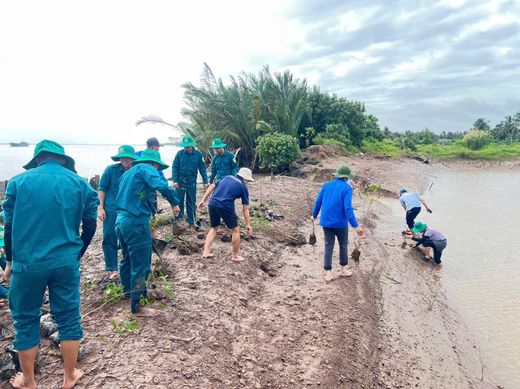
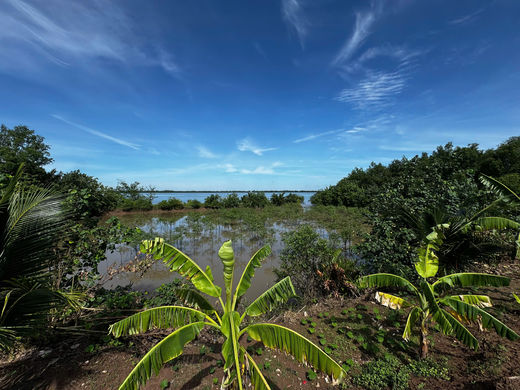
Cu Lao Dung has long been recognised as one of the shrimp-farming hubs of the Mekong Delta. Shrimp farming is a common livelihood activity that has contributed significantly to household incomes and economic development in the area. However, alongside the growth of high-tech shrimp farming models, the district is facing a growing challenge which is the increasing number of abandoned shrimp ponds, particularly those located along coastal dikes, where one side borders the dike and the other is separated from the river by a narrow embankment.
These shrimp ponds have been abandoned for various reasons, most commonly due to embankment erosion, water pollution, disease outbreaks, and rising production costs. After repeated crop failures, many farmers no longer had sufficient financial resources to reinvest in shrimp farming and were forced to cease operations, leaving their ponds unused and deteriorating over time. In addition, some ponds located along riverbanks have experienced erosion as waves and tidal action gradually wear away the embankments, weakening the pond structures.
As these narrow embankments continue to erode, the risk extends beyond the ponds themselves. Severe erosion can threaten the foundations of the main dike system, putting nearby farmland, homes, infrastructure, and local communities at risk, especially during the rainy season and periods of high tide.
Aside from a loss of productive land, abandoned shrimp ponds have serious environmental consequences. They contribute to land degradation, soil salinization, declining water quality, and damage to natural ecosystems. In particular, the conversion of mangrove areas into shrimp farms has reduced mangrove forest coverage, negatively affecting biodiversity and weakening the resilience of local ecosystems to the impacts of climate change.
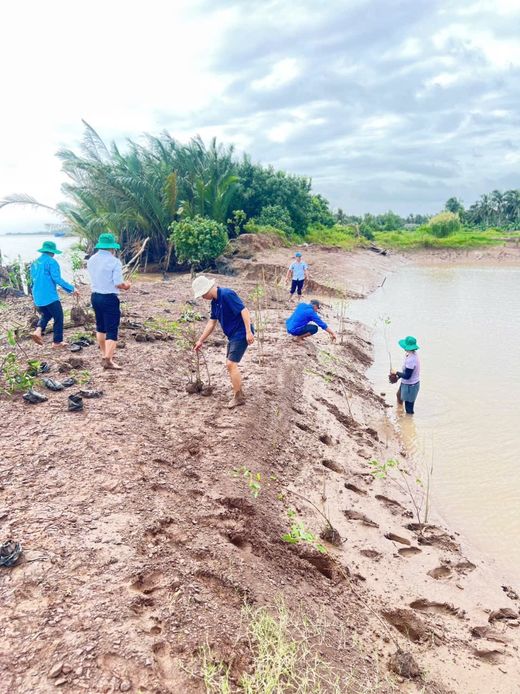
To address these challenges, the project “Climate Resilience in Can Tho City has been working to conserve and restore mangrove ecosystems in Cu Lao Dung. One of the project’s key interventions is the planting of trees in coastal buffer zones and the restoration of abandoned shrimp ponds through nature-based solutions. These efforts help stabilise the soil, reduce erosion, strengthen coastal protection, and safeguard local livelihoods and infrastructure.
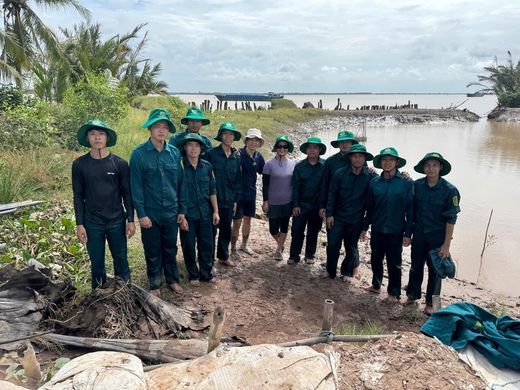
Over the past two years, Mission Alliance, in collaboration with the Department of Economy, the Women’s Union, and the Youth Union in An Thanh and Cu Lao Dung communes, has carried out numerous tree-planting campaigns aimed at restoring degraded shrimp ponds. At times, these efforts seemed pessimistic in the face of harsh environmental conditions and the growing impacts of climate change. The survival rate of newly planted trees did not always meet expectations. Nevertheless, project partners and local communities never lost hope or their determination to bring green life back to this landscape.
That perseverance has begun to bear fruit. During a recent field visit, we passed by an abandoned shrimp pond where, only several months earlier, we had doubted whether any tree could survive. To our delight, a remarkable scene unfolded before us. Young mangrove seedlings were thriving and growing vigorously. Clusters of young mangrove trees are bringing renewed life to a once-barren landscape. Their vibrant green leaves were not only a sign of ecological recovery but also a testament to nature’s remarkable ability to regenerate when given the opportunity.
The journey to restore abandoned shrimp ponds in Cu Lao Dung remains challenging and requires continued time, commitment, and collaboration stakeholders. Yet every seedling that survives today brings renewed hope for tomorrow. These small but meaningful successes inspire us to continue working together to protect and restore mangrove ecosystems, helping Cu Lao Dung become greener, more sustainable, and more resilient in the face of climate change.